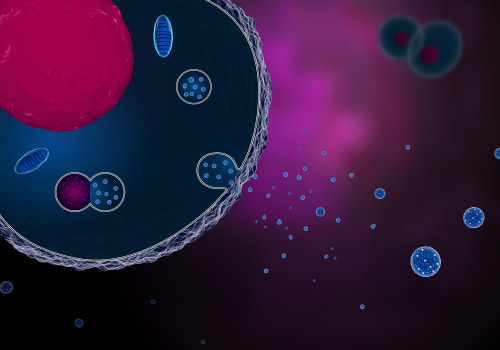
Exosomes are small extracellular vesicles, typically ranging from 30 to 150 nanometres in diameter, that play a pivotal role in intercellular communication. They are secreted by various cell types and are found in numerous biological fluids, including blood, urine, and saliva. These vesicles are formed within the endosomal system of cells and are released into the extracellular space when multivesicular bodies fuse with the plasma membrane. The significance of exosomes lies in their ability to carry a diverse array of molecular cargo, including proteins, lipids, and nucleic acids, which reflect the physiological state of their parent cells. The primary function of exosomes is to facilitate communication between cells.
By transferring their molecular contents to recipient cells, exosomes can influence various biological processes such as immune responses, cell proliferation, and apoptosis. This intercellular communication is crucial for maintaining homeostasis and responding to environmental changes. Moreover, exosomes have been implicated in several pathological conditions, including cancer, neurodegenerative diseases, and cardiovascular disorders, highlighting their importance beyond mere cellular communication. Understanding the role of exosomes in health and disease is essential for developing novel diagnostic and therapeutic strategies. Their presence in body fluids makes them an attractive target for non-invasive biomarker discovery.
As researchers delve deeper into the complexities of exosomal biology, it becomes increasingly clear that these vesicles hold significant potential for revolutionising our approach to disease diagnosis and monitoring. By harnessing the information contained within exosomes, we can gain valuable insights into disease mechanisms and progression, paving the way for more personalised medical interventions.
Understanding Exosomes: Structure and Composition
Exosomes are small extracellular vesicles, typically ranging from 30 to 150 nanometers in diameter, that play a pivotal role in intercellular communication. Their unique structure and composition are fundamental to their function as biomarkers in various health conditions.The structural integrity of exosomes is primarily attributed to their lipid bilayer, which is similar to that of cellular membranes. This bilayer is composed of phospholipids, cholesterol, and proteins, providing a stable environment for the encapsulated cargo.The lipid composition can vary significantly depending on the cell type from which the exosome originates, influencing their biological activity and interaction with recipient cells.Within this lipid bilayer, exosomes carry a diverse array of molecular cargo, including:
- Proteins: Exosomes contain proteins that reflect the physiological state of their parent cells. These proteins can include membrane proteins, cytosolic proteins, and even proteins involved in signaling pathways. For instance, tumor-derived exosomes may carry oncogenic proteins that can influence the behaviour of surrounding cells.
- Lipids: The lipid content of exosomes is not merely structural; it also plays a role in cell signalling and membrane fusion processes. Specific lipid species can modulate the exosome's interaction with target cells and influence their uptake.
- Nucleic Acids: Exosomes are rich in various RNA species, including mRNA and microRNA (miRNA).
These RNA molecules can be transferred to recipient cells, where they may regulate gene expression and contribute to cellular responses. The presence of specific miRNA signatures in exosomes has been linked to different diseases, making them potential biomarkers for diagnosis and prognosis.
- Endosomal Exosomes: Formed from the inward budding of endosomal membranes, these are the most common type of exosomes.
- Tumour-Derived Exosomes: Released by cancer cells, these exosomes often carry unique biomarkers that can provide insights into tumour progression and treatment response.
- Immune Cell-Derived Exosomes: These exosomes play a crucial role in immune modulation and can influence the behaviour of other immune cells.
The Biogenesis of Exosomes
Exosomes are small extracellular vesicles that play a crucial role in intercellular communication. Their formation is a complex process that primarily occurs through the endosomal pathway, which involves several key steps and regulatory mechanisms.The biogenesis of exosomes begins with the inward budding of the plasma membrane, leading to the formation of early endosomes.These early endosomes can then mature into late endosomes or multivesicular bodies (MVBs). During this maturation process, intraluminal vesicles (ILVs) are formed within the MVBs. These ILVs are essentially the precursors to exosomes and contain various biomolecules, including proteins, lipids, and nucleic acids.Once the MVBs are formed, they can follow two distinct pathways: they can either fuse with lysosomes for degradation or be transported to the plasma membrane for exosome release. The latter pathway is critical for exosome secretion.
The fusion of MVBs with the plasma membrane results in the release of ILVs into the extracellular space, where they are then referred to as exosomes.Several mechanisms regulate the secretion of exosomes. Rab GTPases , a family of proteins involved in vesicle trafficking, play a significant role in mediating the transport of MVBs to the plasma membrane. Additionally, ESCRT (Endosomal Sorting Complex Required for Transport) machinery is essential for the formation of ILVs within MVBs and their subsequent release as exosomes. Other factors, such as lipid composition and cellular stress signals, can also influence exosome biogenesis and release.Understanding the mechanisms behind exosome formation is vital for elucidating their roles in health and disease.
For instance, alterations in exosome production and composition have been linked to various pathological conditions, including cancer and neurodegenerative diseases. By studying these processes, researchers can gain insights into potential therapeutic targets and biomarkers for disease diagnosis and monitoring.
Exosomes in Intercellular Communication
Exosomes play a pivotal role in intercellular communication , acting as carriers of molecular signals that facilitate the transfer of information between cells. These nanoscale vesicles, typically ranging from 30 to 150 nanometers in diameter, are secreted by various cell types and contain a complex cargo of proteins, lipids, RNA, and other biomolecules. This cargo reflects the physiological state of the originating cell and can influence the behaviour of recipient cells.One of the primary mechanisms through which exosomes mediate cell signaling is by delivering specific molecules that can alter gene expression and cellular function in target cells.For instance, exosomal microRNAs (miRNAs) have been shown to modulate gene expression by binding to complementary sequences in target mRNAs, leading to their degradation or inhibition of translation. This process is crucial in various biological contexts, including immune responses, tissue repair, and cancer progression.Moreover, exosomes can also carry proteins that are involved in cell adhesion and signalling pathways. For example, integrins and tetraspanins present on the surface of exosomes can interact with receptors on recipient cells, initiating signalling cascades that affect cellular behaviour. This interaction not only facilitates communication but also plays a role in processes such as inflammation and tumour metastasis.The ability of exosomes to cross biological barriers, such as the blood-brain barrier, further underscores their significance in intercellular communication.
This property allows them to transport signals from the central nervous system to peripheral tissues and vice versa, highlighting their potential as therapeutic agents and biomarkers for neurological diseases.In summary, exosomes serve as vital mediators of cellular communication , influencing a wide array of physiological processes. Their role in transferring molecular signals not only enhances our understanding of normal cellular functions but also provides insights into the pathogenesis of various diseases. As research continues to uncover the complexities of exosomal communication, their potential applications in diagnostics and therapeutics are becoming increasingly apparent.
Exosomes as Biomarkers: An Overview
Exosomes have emerged as a promising class of biomarkers in the realm of disease detection, offering unique insights into the physiological and pathological states of cells. These nanoscale extracellular vesicles are secreted by various cell types and encapsulate a diverse array of biomolecules, including proteins, lipids, and nucleic acids.This rich molecular content reflects the cellular environment from which they originate, making exosomes invaluable for understanding disease mechanisms.One of the most significant advantages of using exosomes as biomarkers lies in their presence in various biological fluids, such as blood, urine, and saliva. This accessibility facilitates the development of liquid biopsyliquid biopsy techniques, which are less invasive compared to traditional tissue biopsies. Liquid biopsies allow for real-time monitoring of disease progression and treatment response, providing a dynamic view of a patient's health status.In the context of cancer, exosomes play a crucial role in tumour biology. They can carry oncogenic proteins and specific microRNAs that are indicative of malignancy.
For instance, studies have shown that exosomes derived from cancer cells can promote metastasis by transferring pro-tumorigenic signals to surrounding healthy cells. This capability not only aids in early detection but also offers potential targets for therapeutic intervention.Moreover, exosomal biomarkers have shown promise in neurodegenerative diseases. For example, exosomes from patients with Alzheimer’s disease contain elevated levels of amyloid-beta and tau proteins, which are critical for diagnosing and monitoring the disease. The ability to isolate these exosomes from blood samples presents a non-invasive method to assess the biochemical changes associated with neurodegeneration.Despite their potential, challenges remain in the standardisation of exosome isolation and analysis methods.
Variability in protocols can lead to inconsistent results across studies. However, advancements in technology are paving the way for more reliable techniques that enhance the reproducibility and clinical applicability of exosome-based biomarkers.In summary, exosomes represent a frontier in biomarker research with their multifaceted roles in disease detection and monitoring. Their integration into liquid biopsy frameworks could revolutionise how we approach diagnostics and treatment strategies across various medical fields.
Exosomal Biomarkers in Cancer Diagnosis and Treatment
Exosomes have emerged as a pivotal component in the landscape of cancer diagnostics and treatment monitoring. These nanoscale vesicles, secreted by various cell types, including cancer cells, carry a wealth of molecular information that reflects the physiological state of their cells of origin.This characteristic makes them particularly valuable as biomarkers for cancer.One of the most significant advantages of using exosomes in cancer diagnosis is their presence in various body fluids, such as blood, urine, and saliva. This accessibility allows for non-invasive sampling , which is crucial for early detection and ongoing monitoring of cancer progression. For instance, studies have demonstrated that exosomes isolated from the plasma of patients with different types of cancer contain specific proteins and nucleic acids that correlate with disease presence and stage.
Early Detection of Cancer
Exosomal biomarkers can facilitate the early detection of cancer by identifying unique molecular signatures associated with malignancies. For example, research has shown that exosomes derived from breast cancer patients exhibit distinct microRNA profiles compared to those from healthy individuals.These microRNAs can serve as potential diagnostic markers, enabling clinicians to identify cancer at an earlier stage when treatment is more likely to be successful.
Treatment Monitoring
In addition to aiding in diagnosis, exosomes play a crucial role in monitoring treatment responses. As therapy progresses, changes in the composition of exosomal cargo can provide insights into how well a patient is responding to treatment. For instance, a decrease in specific oncogenic proteins within exosomes may indicate a positive response to chemotherapy or targeted therapy. This real-time monitoring capability allows for timely adjustments to treatment plans, optimising patient outcomes.Predicting Outcomes
The predictive potential of exosomal biomarkers extends beyond treatment response; they can also inform prognosis.Certain exosomal proteins and genetic materials have been linked to patient survival rates and disease recurrence. By analysing these biomarkers, healthcare providers can better stratify patients based on their risk profiles, leading to more personalised treatment approaches.In conclusion, the integration of exosomal biomarkers into clinical practice holds great promise for revolutionising cancer diagnosis and treatment monitoring. Their ability to provide critical information through non-invasive means not only enhances early detection but also supports tailored therapeutic strategies, ultimately improving patient care.
Exosomal Biomarkers in Neurodegenerative Diseases
Exosomes have emerged as pivotal players in the realm of neurodegenerative diseases, particularly in understanding the complex mechanisms underlying conditions such as Alzheimer's and Parkinson's. These nanoscale vesicles, secreted by various cell types, carry a wealth of molecular information that reflects the physiological state of their cells of origin.This characteristic makes them invaluable for identifying potential biomarkers that can aid in early diagnosis and monitoring of disease progression.In the context of Alzheimer's disease, exosomes have been shown to transport amyloid-beta peptides and tau proteins, which are critical in the pathogenesis of this condition. Studies indicate that the levels of these proteins in exosomes isolated from the cerebrospinal fluid (CSF) or blood can correlate with disease severity. For instance, elevated concentrations of amyloid-beta in exosomes have been associated with increased plaque formation in the brains of Alzheimer's patients. This correlation suggests that exosomal analysis could serve as a non-invasive method for assessing disease status and progression.Moreover, specific microRNA signatures found within exosomes have been identified as potential biomarkers for Alzheimer's.
These microRNAs can regulate gene expression related to neuroinflammation and neuronal health, providing insights into the underlying biological processes at play. By profiling these exosomal microRNAs, researchers can gain a better understanding of individual patient responses to therapies and disease progression.Similarly, in Parkinson's disease, exosomes derived from neuronal cells have been implicated in the spread of alpha-synuclein aggregates, a hallmark of the disease. The presence of these aggregates in exosomes can potentially serve as a biomarker for early detection and monitoring of Parkinson's. Furthermore, the ability to isolate exosomes from peripheral blood offers a minimally invasive approach to track changes over time, making it an attractive option for clinical applications.The role of exosomes extends beyond mere biomarkers; they also hold promise as therapeutic targets.
By understanding how exosomes contribute to neurodegenerative processes, researchers can develop strategies to modulate their release or content. For example, inhibiting the secretion of pathogenic proteins via exosomes could slow down disease progression or even reverse some effects.In conclusion, the exploration of exosomal biomarkers in neurodegenerative diseases like Alzheimer's and Parkinson's presents a promising frontier in neuroscience. As research continues to unravel the complexities of these vesicles, their potential to transform diagnostic and therapeutic approaches becomes increasingly evident.
Challenges in Exosome Isolation and Analysis
Isolating and analysing exosomes presents a unique set of challenges that can significantly impact the reliability and applicability of research findings. These tiny extracellular vesicles, which play a crucial role in intercellular communication, are often difficult to isolate due to their small size and the complex biological fluids from which they are derived.One of the primary challenges in exosome isolation is the lack of standardisation in protocols.Various techniques have been developed, including ultracentrifugation, size exclusion chromatography, and precipitation methods. Each method has its advantages and limitations:
- Ultracentrifugation: This is the most commonly used method for isolating exosomes. However, it requires expensive equipment and can be time-consuming. Additionally, it may not effectively separate exosomes from other extracellular vesicles or protein aggregates.
- Size exclusion chromatography: This technique allows for the separation of exosomes based on size but may not yield high purity levels.
It also requires careful optimisation to ensure that the exosomes are not damaged during the process.
- Precipitation methods: These are simpler and faster but often result in lower yields and may co-isolate contaminants that can interfere with downstream analyses.
Advanced techniques like mass spectrometry and next-generation sequencing are becoming more prevalent but require specialised knowledge and equipment.In summary, while significant progress has been made in understanding exosomes, overcoming the challenges associated with their isolation and analysis is essential for advancing their clinical utility. Continued innovation in isolation techniques and analytical methods will be crucial for harnessing the full potential of exosomes as biomarkers in human health and disease.
Advancements in Exosome Research and Technology
Recent years have witnessed remarkable advancements in exosome research , driven by the need for more effective diagnostic and therapeutic tools in medicine. These tiny vesicles, which play a pivotal role in intercellular communication, have become focal points for understanding various diseases, including cancer and neurodegenerative disorders. As researchers delve deeper into the complexities of exosomes, innovative technologies are emerging that enhance their study and application.One of the most significant breakthroughs is the development of , driven by the need for more effective diagnostic and therapeutic tools in medicine. These tiny vesicles, which play a pivotal role in intercellular communication, have become focal points for understanding various diseases, including cancer and neurodegenerative disorders. As researchers delve deeper into the complexities of exosomes, innovative technologies are emerging that enhance their study and application.One of the most significant breakthroughs is the development of microfluidic devices designed specifically for the isolation of exosomes from biological fluids.These devices allow for rapid and efficient separation based on size and density, significantly improving the yield and purity of isolated exosomes. By utilising microfluidics, researchers can process small sample volumes while maintaining the integrity of the exosomal content, which is crucial for downstream analyses.Another promising technology is the use of nanoparticle-based methods for exosome capture. These methods employ engineered nanoparticles that can selectively bind to specific surface markers on exosomes, facilitating their isolation from complex biological matrices. This specificity not only enhances the purity of isolated exosomes but also allows for the profiling of exosomal contents with greater accuracy.In addition to isolation techniques, advancements in mass spectrometry and next-generation sequencing (NGS) have revolutionised the analysis of exosomal proteins and nucleic acids.
Mass spectrometry enables detailed proteomic profiling, allowing researchers to identify potential biomarkers associated with various diseases. Meanwhile, NGS provides insights into the RNA content of exosomes, revealing microRNA signatures that could serve as indicators of disease progression or treatment response.The future directions in exosome studies are equally exciting. Researchers are exploring the potential of using engineered exosomes as therapeutic agents, capable of delivering drugs or genetic material directly to target cells. This approach could lead to novel treatment strategies for conditions such as cancer, where traditional therapies often fall short.Moreover, ongoing studies aim to standardise protocols for exosome isolation and analysis, which will enhance reproducibility across laboratories and facilitate clinical applications.
As these technologies continue to evolve, they hold the promise of transforming exosomes into reliable biomarkers for early disease detection and monitoring therapeutic efficacy.
<strong>Future Perspectives on Exosomal Biomarkers</strong>
The future of exosomal biomarkers in clinical practice is poised for significant advancements, driven by ongoing research and technological innovations. As our understanding of exosomes deepens, their potential applications in diagnostics, therapeutics, and monitoring disease progression are becoming increasingly apparent.One promising area is the integration of exosomal analysis into routine clinical workflows. With the development of more refined isolation techniques and analytical methods, healthcare professionals may soon be able to utilise exosomes as reliable biomarkers for a variety of conditions. This could lead to earlier detection of diseases such as cancer, neurodegenerative disorders, and cardiovascular diseases, ultimately improving patient outcomes.Moreover, the role of exosomes in personalised medicine cannot be overstated.By profiling exosomal content from individual patients, clinicians can gain insights into the specific molecular mechanisms driving a patient's disease. This information can guide tailored treatment strategies, allowing for more effective interventions that are customised to the unique biological landscape of each patient.In addition to diagnostics, exosomes hold potential as therapeutic agents. Research is exploring their use in drug delivery systems, where exosomes can be engineered to carry therapeutic molecules directly to target cells. This targeted approach could enhance the efficacy of treatments while minimising side effects, particularly in cancer therapy.Furthermore, the application of machine learning and artificial intelligence in analysing exosomal data is an exciting frontier.
These technologies can help identify patterns and correlations within complex datasets, leading to the discovery of novel biomarkers and enhancing predictive models for disease progression and treatment response.As we look ahead, collaboration between researchers, clinicians, and technology developers will be crucial in overcoming existing challenges related to exosome isolation and characterisation. Continued investment in this field will not only advance our understanding of exosomes but also pave the way for their integration into mainstream medical practice.In conclusion, the future perspectives on exosomal biomarkers are bright. With ongoing research and technological advancements, we are on the cusp of a new era in diagnostics and treatment that leverages the unique properties of exosomes to improve human health.