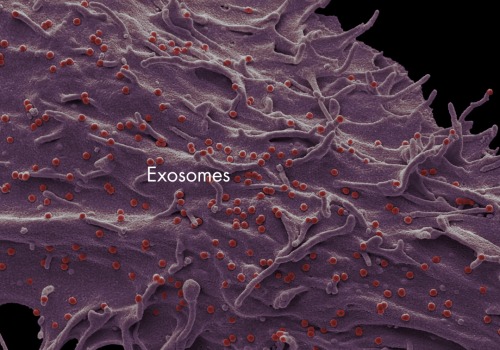
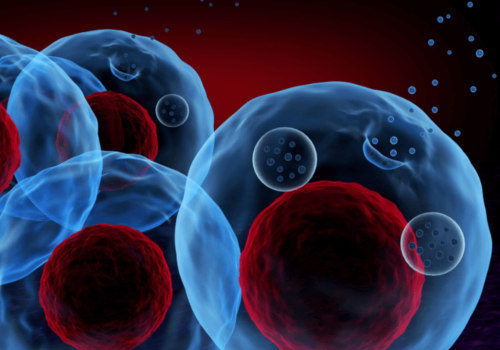
Exosomes are extracellular vesicles that play a crucial role in intercellular communication. These nano-sized vesicles, typically ranging from 30 to 150 nanometers in diameter, are secreted by various cell types and are found in numerous biological fluids, including blood, urine, and saliva. Composed of a lipid bilayer, exosomes encapsulate a diverse array of biomolecules such as proteins, lipids, and nucleic acids (including mRNA and microRNA). This unique composition allows exosomes to facilitate the transfer of genetic information and signalling molecules between cells, thereby influencing various physiological and pathological processes.The significance of exosomes extends beyond mere cellular waste disposal; they are pivotal in regulating numerous biological functions.
For instance, exosomes are involved in immune responses, where they can modulate the activity of immune cells, enhancing or suppressing immune reactions as necessary. In the context of cancer, exosomes can carry oncogenic factors that promote tumour growth and metastasis or serve as biomarkers for early detection of malignancies. Their ability to reflect the physiological state of their parent cells makes them valuable tools for diagnostics and therapeutic applications.Moreover, exosomes have garnered attention for their potential in drug delivery systems. Due to their natural origin and biocompatibility, they can be engineered to carry therapeutic agents directly to target cells, minimising side effects associated with conventional drug delivery methods.
This targeted approach not only enhances the efficacy of treatments but also opens new avenues for personalised medicine.In summary, exosomes are not just passive byproducts of cellular activity; they are dynamic entities that play essential roles in health and disease. Understanding their functions and mechanisms is vital for harnessing their potential in clinical applications, particularly in the fields of oncology, immunology, and regenerative medicine.
The Biological Role of Exosomes
Exosomes play a pivotal role in the intricate web of intercellular communication, acting as vehicles for the transfer of molecular signals between cells. These nanoscale vesicles, typically ranging from 30 to 150 nanometers in diameter, are secreted by various cell types and are found in numerous biological fluids, including blood, urine, and saliva. Their composition is rich in proteins, lipids, and nucleic acids, which collectively contribute to their biological functions.One of the primary biological roles of exosomes is their involvement in cell signalling.They facilitate communication between cells by transferring bioactive molecules that can influence the behaviour of recipient cells. For instance, exosomes derived from immune cells can carry cytokines and other signalling molecules that modulate immune responses in target cells. This mechanism is crucial for maintaining homeostasis and orchestrating responses to physiological changes or pathological conditions.Moreover, exosomes are integral to the process of signal transduction. When exosomes fuse with recipient cells, they release their cargo into the cytoplasm, which can activate specific signalling pathways.
This process can lead to various outcomes, such as altered gene expression, changes in cell proliferation, or even apoptosis. For example, exosomal microRNAs (miRNAs) have been shown to regulate gene expression by binding to complementary mRNA sequences in target cells, thereby influencing cellular functions.The ability of exosomes to mediate communication extends beyond mere signalling; they also play a significant role in modulating cellular responses. In cancer biology, for instance, tumour-derived exosomes can promote tumour growth and metastasis by transferring oncogenic factors to surrounding healthy cells. This not only alters the behaviour of these cells but also modifies the tumour microenvironment, facilitating cancer progression.In summary, exosomes serve as crucial mediators of intercellular communication and signal transduction.
Their capacity to transport a diverse array of molecular signals enables them to influence various biological processes significantly. Understanding the biological roles of exosomes opens new avenues for therapeutic interventions and diagnostic applications in numerous diseases.
Exosomes in Cancer Progression
Exosomes play a pivotal role in the complex landscape of cancer biology, acting as key mediators in the processes of tumor growth, metastasis, and angiogenesis. These nanoscale vesicles, secreted by various cell types, are rich in bioactive molecules such as proteins, lipids, and nucleic acids, which can significantly influence the behaviour of recipient cells.One of the most critical functions of exosomes in cancer is their ability to facilitate tumor progression. They achieve this by transferring oncogenic factors that can alter the gene expression profiles of nearby cells.For instance, exosomes derived from cancer cells often contain microRNAs (miRNAs) that can modulate the signalling pathways of adjacent normal cells, promoting a tumour-friendly environment. This process not only aids in the survival and proliferation of cancer cells but also contributes to the reprogramming of surrounding stromal cells to support tumour growth.Moreover, exosomes are instrumental in cancer metastasis. They enable cancer cells to communicate with distant sites in the body, preparing these locations for potential colonisation. By transferring specific proteins and genetic material, exosomes can prime distant tissues to become more receptive to metastatic cells.
This phenomenon is particularly evident in breast and prostate cancers, where exosomal content has been shown to enhance the invasive capabilities of cancer cells.In addition to their roles in growth and metastasis, exosomes are also involved in angiogenesis , the formation of new blood vessels from pre-existing ones. Tumors require a robust blood supply to sustain their growth; thus, exosomes contribute to this process by delivering pro-angiogenic factors such as vascular endothelial growth factor (VEGF). The presence of these factors within exosomes can stimulate endothelial cells, promoting new vessel formation that supplies nutrients and oxygen to tumours.Furthermore, understanding the role of exosomes in cancer progression opens new avenues for therapeutic interventions. By targeting exosomal pathways or utilising them as delivery vehicles for anticancer agents, researchers are exploring innovative strategies to combat cancer more effectively.
The potential for exosomes to serve as biomarkers for early detection and prognosis is also being investigated, highlighting their significance not only in understanding cancer biology but also in improving clinical outcomes.
Exosomes as Biomarkers for Disease Diagnosis
Exosomes have emerged as promising biomarkers for disease diagnosis, particularly due to their presence in various biological fluids, including blood, urine, and saliva. These small vesicles, secreted by cells, encapsulate a diverse array of molecular cargo, such as proteins, lipids, and nucleic acids, which reflect the physiological state of their parent cells. This characteristic makes exosomes invaluable in the realm of liquid biopsies, a minimally invasive method for disease detection.One of the most significant advantages of using exosomes in diagnostics is their ability to provide real-time insights into disease progression and response to treatment. For instance, in cancer diagnostics, exosomal content can reveal specific mutations or alterations associated with tumour development.By analysing these exosomes, clinicians can identify biomarkers that indicate the presence of malignancies at an early stage, potentially before traditional imaging techniques can detect them.Moreover, the analysis of exosomal RNA has shown great promise in identifying various cancers. For example, studies have demonstrated that certain microRNAs (miRNAs) found in exosomes are significantly altered in cancer patients compared to healthy individuals. This alteration can serve as a diagnostic marker for specific types of cancer, such as breast or prostate cancer.In addition to cancer detection, exosomes are being explored for their role in diagnosing other diseases. For instance, neurodegenerative disorders like Alzheimer’s disease have been linked to specific exosomal profiles that could aid in early diagnosis.
The ability to detect these changes through a simple blood test could revolutionise how we approach these complex conditions.Furthermore, the use of liquid biopsies allows for continuous monitoring of disease status over time. As treatment progresses or as the disease evolves, changes in the exosomal profile can provide critical information regarding treatment efficacy and disease recurrence. This dynamic monitoring capability is a significant advancement over traditional biopsy methods, which are often invasive and may not reflect real-time changes in tumour biology.In conclusion, the potential of exosomes as biomarkers for disease diagnosis is vast and continues to expand with ongoing research. Their ability to provide insights into various diseases through non-invasive means positions them at the forefront of modern diagnostic techniques, paving the way for earlier detection and more personalised treatment strategies.
Therapeutic Applications of Exosomes
Exosomes have emerged as a promising avenue in the field of medicine, particularly in the development of novel therapeutic strategies.These nanoscale vesicles, secreted by various cell types, play a crucial role in intercellular communication and have been identified as potential vehicles for drug delivery. Their unique properties make them suitable for targeted therapies, allowing for the precise delivery of therapeutic agents to specific cells or tissues.One of the most significant advantages of using exosomes in drug delivery is their natural ability to encapsulate a variety of biomolecules, including proteins, lipids, and nucleic acids. This capability enables exosomes to transport therapeutic agents such as small interfering RNAs (siRNAs), microRNAs (miRNAs), and chemotherapeutic drugs directly to target cells. By engineering exosomes to express specific surface markers, researchers can enhance their targeting capabilities, ensuring that the delivered payload reaches the intended site of action while minimising off-target effects.Moreover, exosomes can be derived from various sources, including stem cells and immune cells, which can further enhance their therapeutic potential. is their natural ability to encapsulate a variety of biomolecules, including proteins, lipids, and nucleic acids. This capability enables exosomes to transport therapeutic agents such as small interfering RNAs (siRNAs), microRNAs (miRNAs), and chemotherapeutic drugs directly to target cells. By engineering exosomes to express specific surface markers, researchers can enhance their targeting capabilities, ensuring that the delivered payload reaches the intended site of action while minimising off-target effects.Moreover, exosomes can be derived from various sources, including stem cells and immune cells, which can further enhance their therapeutic potential.
For instance, exosomes derived from mesenchymal stem cells (MSCs) have shown promise in regenerative medicine due to their ability to promote tissue repair and modulate immune responses. These MSC-derived exosomes can carry growth factors and anti-inflammatory molecules that aid in healing processes.In addition to their role in drug delivery, exosomes are being explored for their potential in treating a range of diseases, including cancer, neurodegenerative disorders, and cardiovascular diseases. For example, exosome-based therapies are being investigated for their ability to deliver anticancer agents directly to tumour cells, thereby increasing the efficacy of treatment while reducing systemic toxicity.Furthermore, the use of exosome-based therapies extends beyond direct drug delivery. They can also serve as diagnostic tools or biomarkers for disease progression.
The cargo within exosomes reflects the physiological state of their parent cells, making them valuable for monitoring disease status and treatment response.In conclusion, the therapeutic applications of exosomes represent a rapidly evolving field with significant implications for modern medicine. Their ability to facilitate targeted drug delivery and serve as vehicles for novel therapies positions them at the forefront of innovative treatment strategies aimed at improving patient outcomes across various medical disciplines.
Exosomal Content: Proteins, RNA, and Lipids
Exosomes are intricate nanovesicles that play a pivotal role in intercellular communication, and their composition is fundamental to their diverse functions. The molecular makeup of exosomes primarily includes proteins, RNA, and lipids, each contributing uniquely to their biological roles.Proteins in Exosomes
- Exosomes are rich in proteins that originate from the parent cell's cytoplasm and membrane. These proteins can be classified into several categories:
- Structural Proteins: These provide stability and integrity to the exosomal membrane.
Common examples include tetraspanins (such as CD63, CD81, and CD9), which facilitate the formation of exosomes and their interaction with recipient cells.
- Enzymes: Various enzymes present in exosomes can influence metabolic processes in target cells. For instance, exosomal alkaline phosphatase has been implicated in modulating cellular signalling pathways.
- Signalling Molecules: Proteins that act as ligands for receptors on recipient cells can initiate signalling cascades, thereby altering cellular behaviour. This is crucial in processes such as immune response modulation and cancer progression.
RNA in Exosomes
- The RNA content of exosomes is particularly noteworthy, comprising various types of RNA, including:
- Messenger RNA (mRNA): These molecules can be transferred to recipient cells, where they may be translated into proteins, thus influencing the protein synthesis machinery of the target cell.
- MicroRNA (miRNA): Small non-coding RNAs that play a critical role in gene regulation. Exosomal miRNAs can modulate gene expression in recipient cells by binding to complementary mRNA sequences, leading to mRNA degradation or inhibition of translation.
- Long Non-Coding RNA (lncRNA): Emerging evidence suggests that lncRNAs within exosomes may also participate in regulating gene expression and cellular processes.
Lipids in Exosomes
- The lipid bilayer of exosomes is not merely a structural component; it plays a significant role in their functionality:
- Lipid Composition: The specific types of lipids present can influence the biophysical properties of exosomes, affecting their stability and interaction with other cells.
Common lipids include phospholipids, cholesterol, and sphingolipids.
- Membrane Fluidity: The lipid composition affects membrane fluidity, which is crucial for the fusion of exosomes with target cell membranes and the subsequent release of their cargo.
Challenges and Future Directions in Exosome Research
The field of exosome research is rapidly evolving, yet it faces several significant challenges that must be addressed to fully harness the potential of these vesicles in clinical applications. One of the primary hurdles is the isolation and characterization of exosomes. Current methods, such as ultracentrifugation and precipitation, often yield heterogeneous populations of exosomes, which can complicate downstream analyses.The lack of standardized protocols for exosome isolation means that results can vary significantly between studies, making it difficult to compare findings across different research groups.Another challenge lies in the understanding of exosomal cargo. Exosomes carry a complex mixture of proteins, lipids, and nucleic acids, and deciphering the functional roles of these components in various biological contexts remains a daunting task. The dynamic nature of exosome composition can also change in response to environmental factors or disease states, further complicating our understanding.Moreover, while exosomes have shown promise as biomarkers for various diseases, including cancer, their clinical utility is still under investigation. The translation of exosome-based diagnostics from bench to bedside requires rigorous validation and standardization to ensure reliability and reproducibility in clinical settings.Looking towards the future, advancements in exosome technology hold great promise for overcoming these challenges.
Innovations such as microfluidic devices and nanotechnology are being developed to enhance the efficiency and specificity of exosome isolation. These technologies could facilitate the rapid analysis of exosomal content, enabling researchers to gain deeper insights into their biological roles.Furthermore, the integration of omics technologies , including proteomics and genomics, with advanced bioinformatics tools will likely enhance our understanding of exosome biology. By employing high-throughput sequencing and mass spectrometry techniques, researchers can profile exosomal cargo more comprehensively, paving the way for novel therapeutic strategies.In conclusion, while challenges in exosome research persist, ongoing technological advancements and interdisciplinary approaches are set to propel this field forward. As we continue to unravel the complexities of exosomes, their potential as diagnostic and therapeutic tools will become increasingly realised, ultimately improving patient outcomes across a range of diseases.
Conclusion: The Importance of Exosomes in Health and Disease
In summary, the significance of exosomes in both health and disease cannot be overstated.These small vesicles play a crucial role in intercellular communication, influencing various biological processes and disease mechanisms. Their ability to carry a diverse array of biomolecules, including proteins, lipids, and nucleic acids, allows them to modulate the behaviour of recipient cells effectively.Exosomes have emerged as vital players in the progression of numerous diseases, particularly in the context of cancer. They facilitate the transfer of oncogenic signals between tumour cells and their microenvironment, thereby promoting processes such as metastasis and angiogenesis. The presence of specific biomarkers within exosomes has opened new avenues for early diagnosis and prognosis of cancers, including hepatocellular carcinoma (HCC).
By analysing exosomal content through liquid biopsies, clinicians can gain insights into disease progression and treatment responses.Moreover, the therapeutic potential of exosomes is being increasingly recognised. Their natural ability to encapsulate therapeutic agents and deliver them to targeted cells presents a promising strategy for enhancing drug efficacy while minimising side effects. This is particularly relevant in the treatment of complex diseases such as neurodegenerative disorders and various cancers, where traditional therapies often fall short.As research continues to unravel the complexities of exosome biology, their applications in clinical settings are likely to expand. The development of exosome-based therapies and diagnostics could revolutionise how we approach disease management, offering more personalised and effective treatment options.In conclusion, exosomes represent a frontier in biomedical research with significant implications for understanding health and disease.
Their multifaceted roles underscore the need for continued exploration into their mechanisms and potential applications in medicine.